When Your Website No Longer Matches the Level You’re Operating At
There’s a particular stage in business that doesn’t get talked about enough. It’s not the beginning, where everything is new and experimental. And it’s not the large-scale, team-run company phase either. It’s the middle stage — the one where you’ve grown significantly, but your infrastructure hasn’t fully caught up.
You’ve raised your prices. You’ve refined your offers. You’ve gained experience. You’ve worked with enough clients to see patterns clearly. You’re no longer guessing.
But your website still reflects the earlier version of you.
On the surface, everything looks fine. The branding is cohesive. The photos are professional. The copy sounds thoughtful. If someone skimmed it quickly, they might even say it’s “good.”
And yet something feels slightly off. It’s subtle. Hard to articulate. But noticeable.
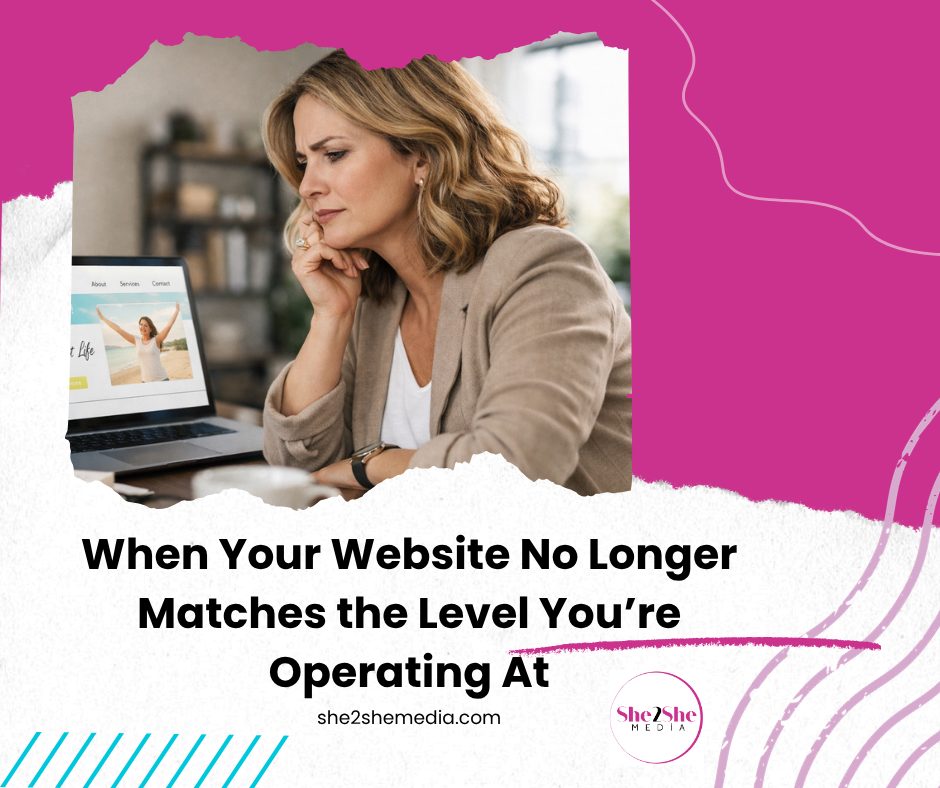
Often that feeling comes from misalignment between who you’ve become as a business owner and how your website still presents you.
Growth Changes How You Speak
When you first build a website, you’re usually in a proving stage. You want to be taken seriously. You want to show range. You want to demonstrate credibility. So the messaging tends to be broad and inclusive.
You might describe yourself as helping entrepreneurs, leaders, creatives, founders, women in transition, women scaling, and women starting out. It feels expansive. It feels safe.
But as you gain clarity in your work, you start to see exactly who you’re best positioned to serve. You notice patterns in the clients who thrive under your guidance. You recognize the problems you solve most efficiently. Your internal clarity sharpens.
If your website doesn’t evolve alongside that clarity, it creates friction.
Your current clients may experience you as decisive, strategic, and confident. But your website might still sound cautious, exploratory, or overly general. That disconnect is small, but powerful.
Qualified clients sense it.
They may not consciously think, “This messaging feels outdated.” What they experience instead is hesitation. Something doesn’t fully click. They scroll. They consider. They leave to think about it.
Hesitation is expensive.
Your Positioning May Have Outgrown Your Original Framework
Another common issue at this stage is structural. Many women build their first website around a service menu approach. There’s a page for each offering. A description of what’s included. A pricing range or inquiry form. That structure works well in the early phase, when you’re still validating offers and attracting a variety of clients.
But as your work matures, the focus often shifts from services to outcomes. You’re no longer just offering sessions, packages, or deliverables. You’re guiding clients through transformation, expansion, growth, stabilization, scaling, refinement — whatever your specific area entails.
If your website still reads like a list of services rather than a cohesive strategic pathway, it underrepresents the level you’re operating at.
Growth-stage clients don’t just want a list of deliverables. They want clarity about the bigger picture. They want to know how you think. They want to understand your process. When your site doesn’t reflect that depth, you unintentionally filter for smaller engagements.
Your Confidence Has Changed — But Your Copy Hasn’t
One of the most telling signs that your website has fallen behind is tone. When you first launched, you might have softened language to avoid sounding overly assertive. You might have leaned heavily into warmth and empathy to build trust. That’s not wrong. In fact, it can be very effective.
But as your confidence grows, your language naturally becomes more direct. You start naming problems clearly, and you stop overexplaining. In short, you trust your expertise.
If your website still sounds like you’re gently asking for permission to lead, it no longer reflects who you are. Clients operating at higher levels respond to calm authority. They want to feel guided, not persuaded. A website that matches your current level doesn’t feel louder, it feels steadier. It doesn’t promise everything. It articulates exactly what it does, and who it’s for.
The Hidden Cost of Digital Misalignment
When your website no longer matches your level, the impact isn’t always dramatic. It’s gradual.
You might notice inquiries from people who aren’t quite the right fit. You may spend more time explaining your approach on sales calls because the site didn’t pre-qualify effectively. You might feel a low-grade frustration every time you send someone your link. It’s not that the site is “bad.” It’s that it’s no longer accurate.
That inaccuracy can create:
- Lower-quality leads
- Longer sales conversations
- Reduced perceived authority
- Internal doubt about your visibility strategy
Over time, that friction compounds. You may start questioning your marketing instead of your positioning. You might assume you need more content, more SEO, or more ads.
Sometimes the real issue is simply that your digital presence hasn’t caught up to your growth.
Signs It May Be Time for a Strategic Rebuild
If you’re unsure whether this applies to you, here are a few indicators:
- You feel slightly disconnected from your own website
- You’ve evolved your offers, but the pages haven’t fully changed
- You hesitate before sending someone your link
- Your inquiries feel inconsistent despite steady visibility
- You find yourself explaining your work differently in conversation than it appears online
None of these are emergencies. But they are signals. Strategic rebuilds aren’t as much about aesthetics, as about alignment. They ensure that when someone lands on your site, they experience the same level of clarity and authority that your clients experience when they work with you.
Evolving With Intention
Scaling doesn’t always require more activity. Sometimes it requires refinement. When your website matches your current level, several things shift:
- Higher-quality clients recognize themselves more quickly
- Sales conversations feel shorter and clearer
- Your visibility efforts produce stronger returns
- You feel more confident directing people to your online presence
- It becomes easier to grow because your foundation supports it
A website should not be static. It should evolve as you do. If you’ve sensed that your business has moved forward but your website hasn’t kept pace, it may be time to approach it more intentionally.
If that resonates, you can book a free consultation and we’ll look at whether your current site accurately reflects the level you’re operating at — and what a more aligned structure could look like.